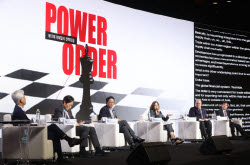
“Security with the U.S., Economy with China‘ No Longer Works… Industry-Specific Cooperation Policy Must Be Redesigned” [ESF2026]
[Sub-Title]
Day 2 of the 17th Edaily Strategy Forum
Presentation by Professor Ki-soon Park, Graduate School of China, Sungkyunkwan University
China’s Supply Chain Weaponization is Spilling over into Korea
“Cooperate with the U.S. in High-Tech Sectors and with China in Non-High-Tech Sectors”
[Edaily Reporters Eung-tae Kim and Min-ji Son] “The premise of ‘Security with the U.S., Economy with China’ is no longer viable. We need to come up with selective cooperation measures by sector as the U.S. and Korea are not free from trade friction when China‘s weaponization of supply chains takes place.
|
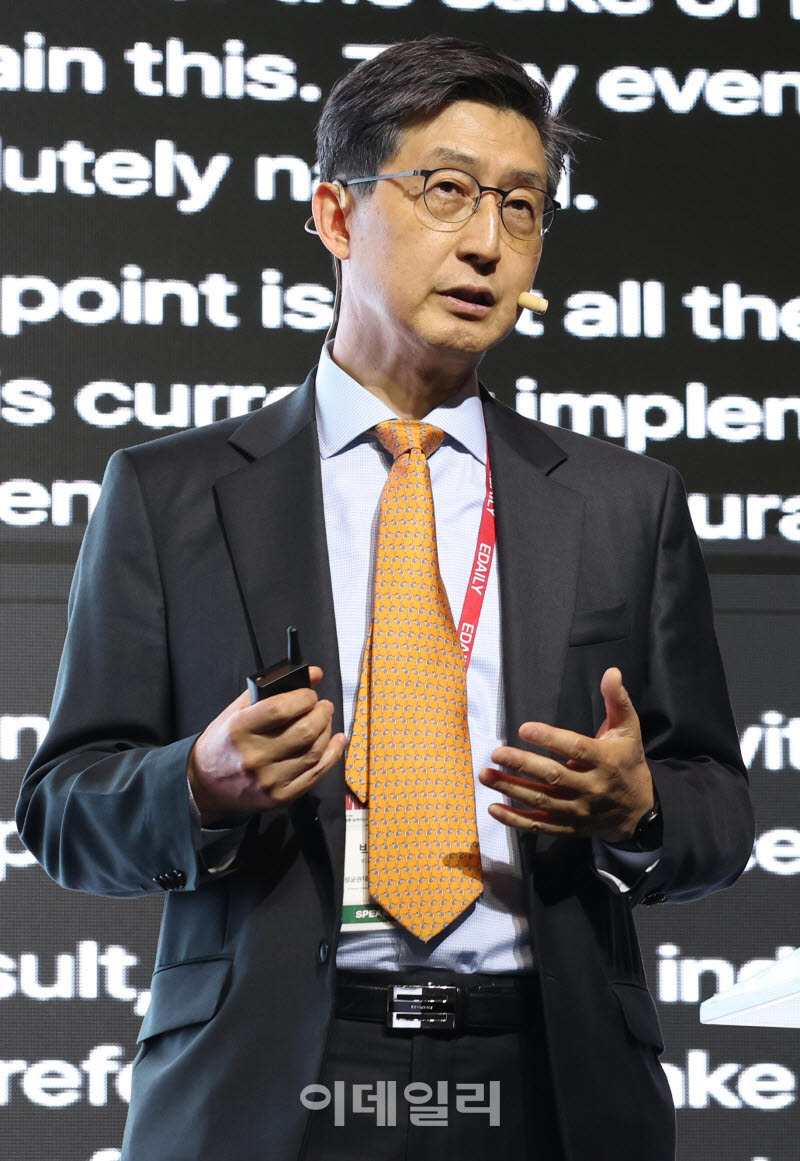
Professor Park analyzed that China is responding by weaponizing its dominance over key parts and materials supply chains as the U.S. pressures China through tariff policies on national security grounds. In fact, as of 2024, China‘s localization rate for rare-earth processing and applications reached 90%, and the localization rate for new-energy vehicle parts surpassed 80%. He explained that China’s strategy of dominating core supply chains, combining economic and security issues, becomes weaponized, and when U.S.-China tensions escalate, Korea will inevitably face trade-related disruptions in the crossfire.
To counter threats such China‘s supply chain weaponization, he recommended Korea to adopt strategic, sector-specific response measures. The approach involves cooperating with the U.S. in high-tech and economic security fields, while pursuing cooperation with China in non-high-tech sectors such as beauty and food products to mitigate supply chain risks and maximize gains. ”For sectors like batteries and semiconductors, shifting toward the U.S. market would be a better strategy for Korean companies since entering the Chinese market would be difficult,“ he said. ”China can produce these items at much lower costs in its own facilities, making competition tough. In contrast, the U.S. offers subsidies and access to a large consumer market.“
Above all, he advised that the government should establish a comprehensive industrial policy to address economic security risks. ”As Korea transitioned from state-led policies to a market-oriented economy since the 1990s, its industrial policy has become fragmented rather than systematic,“ he said. ”Korea need to establish an industrial policy control tower to formulate long-term, integrated response strategies.“