China‘s Supply Chain Dominance Poses a Nuclear-Level Threat… Korea Must Become an Irreplaceable Technology Power Within 5 Years
[Sub-Title]
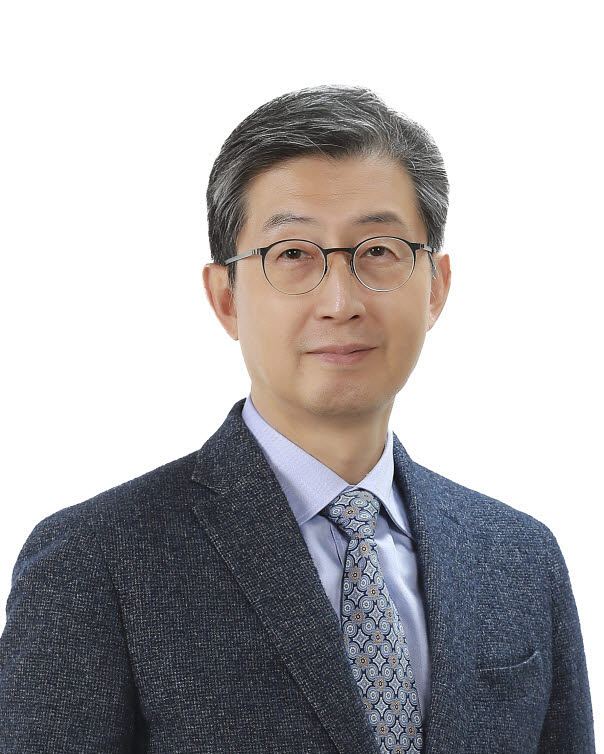
Ki-soon Park, Professor of Graduate School of China at Sungkyunkwan University(SKKU) and Former President of Samsung Economic Research Institute China
China increasingly weaponizing rare earths and critical resources
Korea’s traditional “Security with the U.S., Economy with China” strategy reaching its limits
Korea must rebuild supply chains around the U.S.-led technology alliance
Establishing irreplaceable technological capabilities is essential for national survival
[By Yun-ji, Jeong, Edaily] “Some Chinese scholars have described China‘s dominance over critical supply chains, including rare earths, battery materials, and pharmaceutical raw ingredients, as ’a strategic power in the economic and industrial sphere that is not inferior to possessing nuclear weapons.‘ This shows that China structurally perceives supply chains and entire industrial ecosystems as core assets for national security and geopolitical leverage.”
Kisoon Park, Professor of Graduate School of China at Sungkyunkwan University(SKKU) and Former President of Samsung Economic Research Institute China, made the remarks in a recent interview with Edaily. Having devoted more than two decades to China research through both academic work and extensive on-the-ground experience, he warned that China’s control over critical minerals and industrial materials has now evolved into a strategic weapon. He expressed deep concern that this growth now poses a serious threat to Korea‘s industrial ecosystem.
When asked about Korea’s golden time tasks for the next five years, Park cautioned, “If Korea fails to maintain its super-gap in critical technology sectors like semiconductors, the overall competitiveness of Korean industry could weaken significantly.” Professor Park will present these actionable global supply chain strategies on the second day of the 17th EDaily Strategy Forum (ESF 2026), held on June 16-17.
|
Professor Park observed that China no longer views Korea as a industrial model to learn from, but rather as a strategic competitor and supply chain partner. While Korea previously served as a benchmark for China‘s rapid industrialization, the relationship has shifted to a horizontal structure of direct competition. The structural trade deficit Korea now faces with China serves as a clear macroeconomic milestone of this reversal. “This is because China’s industrial upgrading and technological self-reliance have advanced rapidly, allowing Chinese companies to domestically source many intermediate goods that Korea previously supplied,”“ Park explained.
China‘s growth has been driven by a national-level strategy. China has invested heavily in strategic industries to become a manufacturing powerhouse and achieve technological self-sufficiency, under its landmark ”Made in China 2025.“ Its vast massive consumer market has also served as a testing ground, accelerating technology commercialization, helping produce globally competitive firms such as Huawei and BYD. ”Even in the U.S., China is no longer viewed merely as a low-cost manufacturing base. It is increasingly recognized as an industrial powerhouse competing directly in multiple fields,“ Park said.
Recently, ”Corporate Outbound Expansion (企業出海)“ has emerged as a key trend in the Chinese economy. As competition in the domestic market intensifies, large Chinese firms are turning their eyes to global markets. Chinese technology firms are now playing an increasingly influential role in shaping industrial ecosystems across Global South countries such as Vietnam and Indonesia.
The primary concern is that this China expansion is fundamentally changing the nature of competition itself, directly threatening Korea. ”What used to be competition centered on price and quality has now become a multidimensional contest combining technology, supply chains, and geopolitics.“
”These global expansion of Chinese private companies could generate even stronger soft power effects than previous initiatives such as the Confucius Institutes or the Belt and Road Initiative,“ he further observed ”because it delivers actual industrialization, localized job creation, and direct technology transfer rather than simple image promotion.“ Park views this as evidence that China’s influence will expand not just through military or diplomatic channels, but also through industrial and supply chain networks.
|
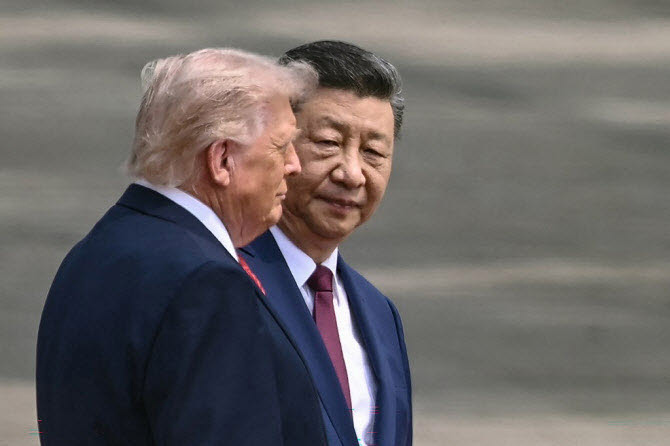
In this complex competitive environment, Park diagnoses that Korea‘s traditional diplomatic framework of ”An-mi-gyeong-jung“ (security with the U.S., economy with China) is becoming increasingly difficult to sustain in today’s environment. He recommends rebuilding supply chain strategy around a technology alliance with the U.S. ”“The vast majority of Korea‘s high-tech industries have developed through close integration with U.S. foundational technologies, research ecosystems, and industrial equipment networks,”“ Park stressed. He urged a strategy of strengthening technological ties with the U.S. while diversifying supply chains toward Europe, India, ASEAN, and other regions.
Despite growing competition, China continues to offer opportunities for Korean companies. As China’s industry upgrades toward finished products, demand within China for Korea‘s high-performance semiconductors, advanced materials, and precision manufacturing equipment is expected to grow. Park argues that Korean firms should move away from its past strategy centered on mass-market consumer goods and instead shift toward selective entry focused on premium products and high-value technologies.
Furthermore, Park advised ”“Korea should pursue cooperation in areas where it can realistically utilize China’s rapid technology commercialization ecosystem.”“ Rather than complete decoupling, Park expects the future Korea-China relationship to be characterized by a combination of competition and cooperation.
Ultimately, Park believes the key to Korea‘s survival depends on developing irreplaceable technologies that China cannot easily replicate. He argues that this is the only way for Korea to survive in an era where technology determines national security and supply chain leadership. ”“The next five years will represent a critical golden hour that will determine whether Korea can remain an irreplaceable nation in global supply chains,” he emphasized. “It is time for leaders to boldly shift strategy from simple production competition to technology- and standards-centered competition.”
About Professor Ki-soon Park
△M.A. in Economics, Seoul National University △Ph.D. in Economics, Chinese Academy of Social Sciences (CASS) △Former Director, KDB Economic Research Institute △Former President, Samsung Economic Research Institute China △(Current) Senior Advisor, Dentons Lee Law Firm △(Current) Professor, Graduate School of China Studies, Sungkyunkwan University △(Current) Visiting Scholar, Stanford University



![‘암살자(들)' 이민호 사는 70억 빌라…알고 보니 육영수 아파트 터[누구집]](https://image.edaily.co.kr/images/vision/files/NP/S/2026/10/PS26101000224t.jpg)